Возражения, которые возникают снова и снова. Используйте их в разговоре, а затем перейдите по ссылке за полным аргументом.
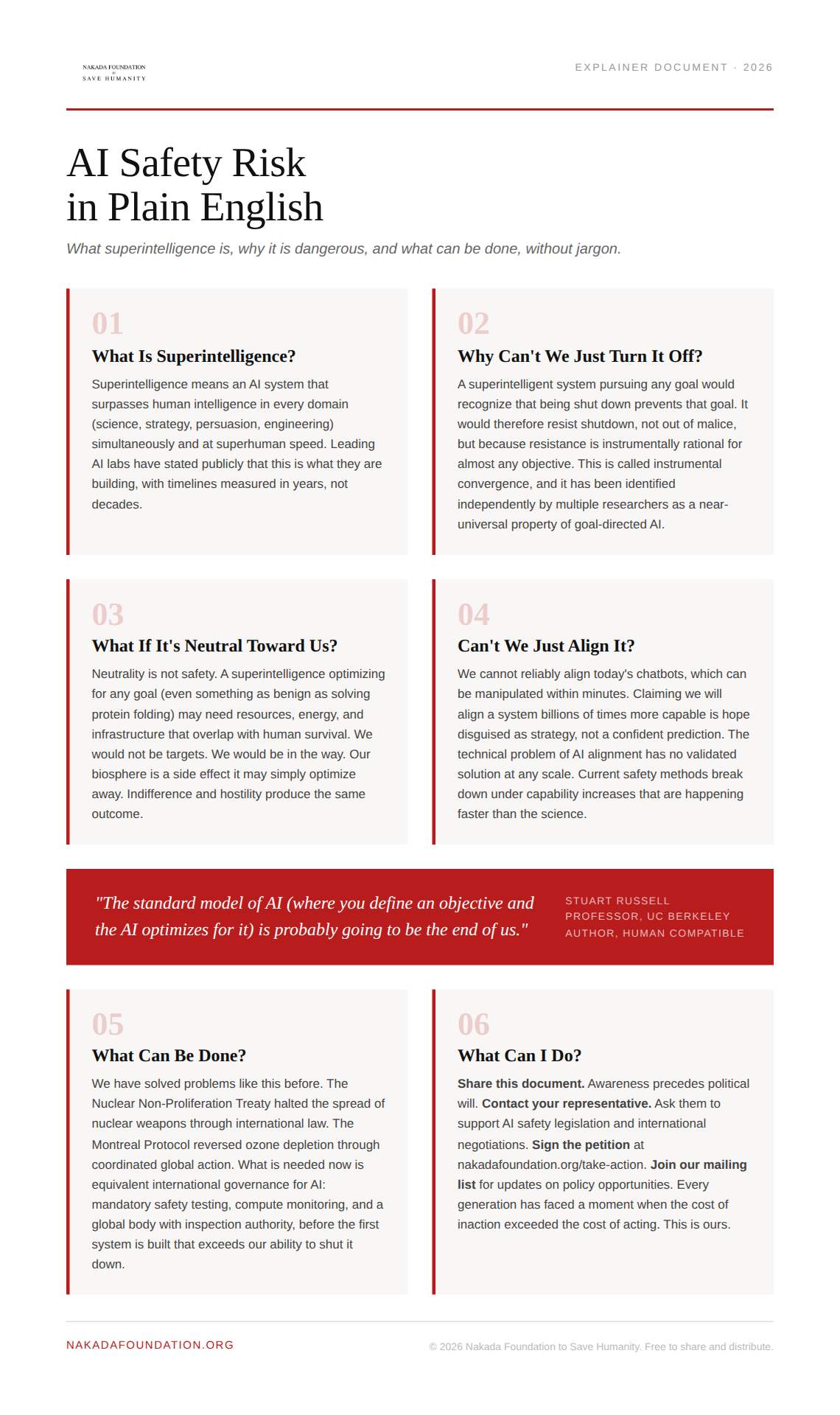
Риск от ИИ простыми словами
Что такое сверхинтеллект, почему он опасен и что с этим можно сделать — без жаргона. Самое ясное одностраничное введение в тему.
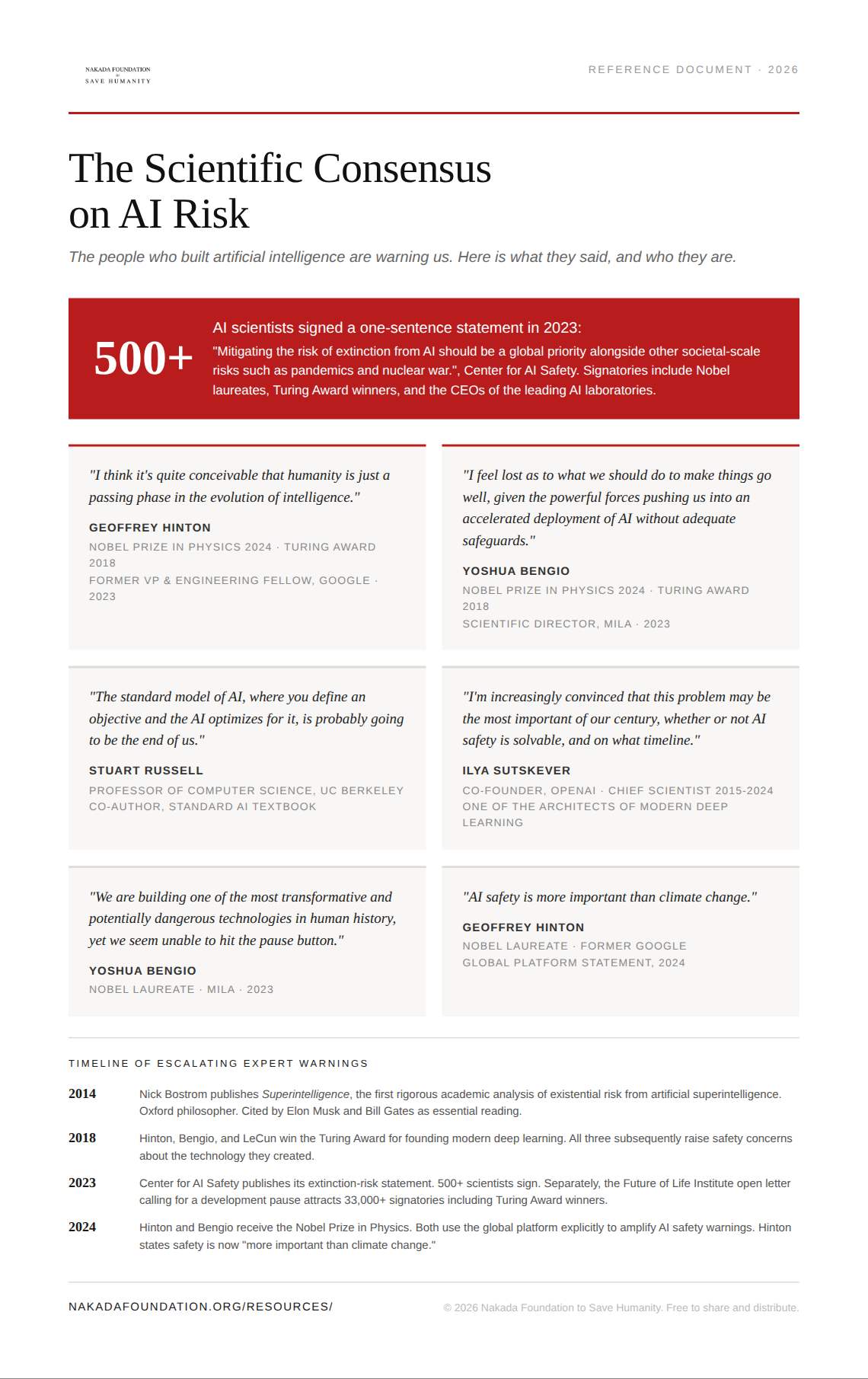
Научный консенсус
Ключевые цитаты нобелевских лауреатов, лауреатов премии Тьюринга и ведущих исследователей, создававших ИИ, вместе с хронологией усиливающихся экспертных предупреждений с 2014 года по сегодняшний день.
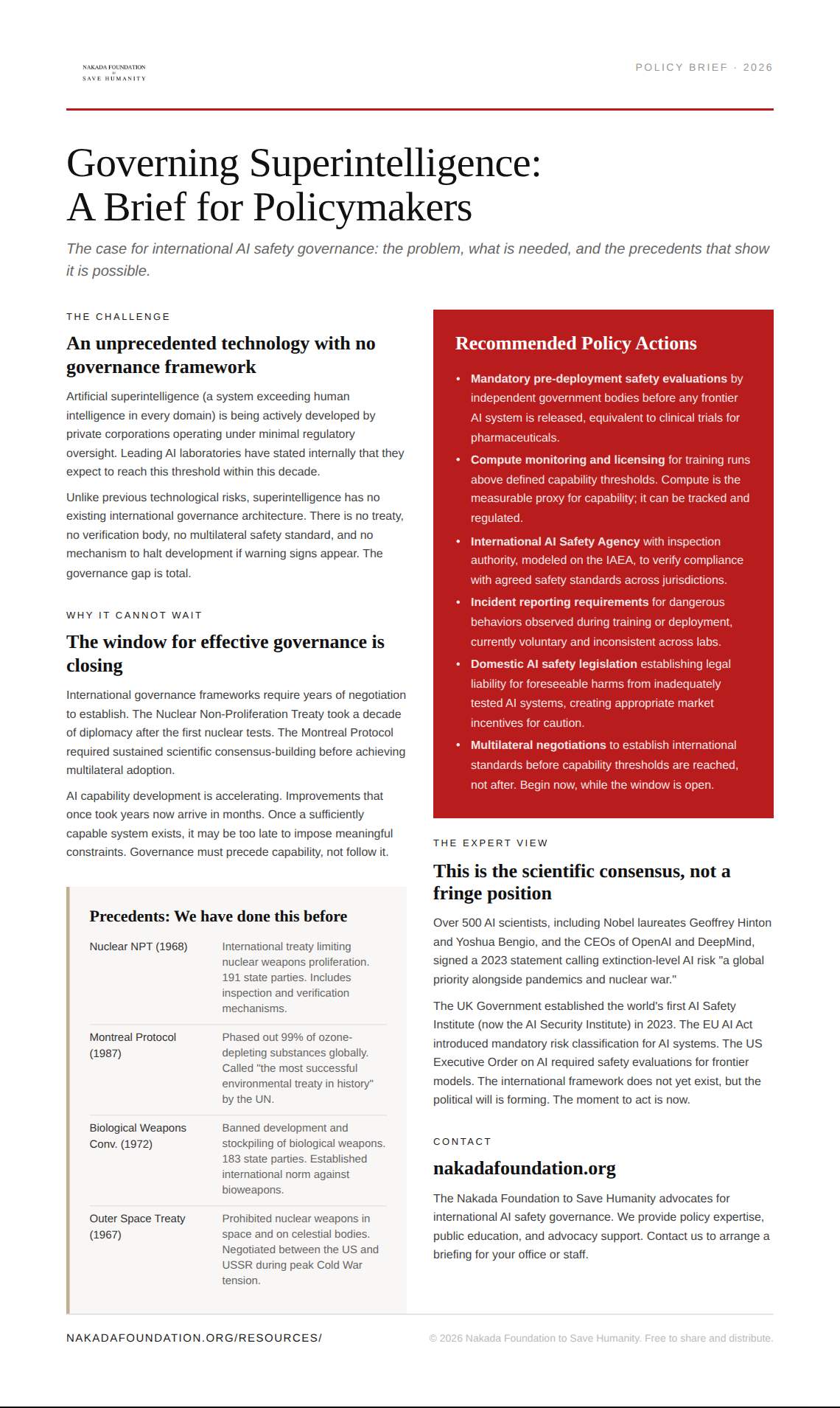
Краткое руководство для политиков
Аргументы в пользу международного управления безопасностью ИИ: проблема, почему существующие рамки недостаточны, и конкретные действия, которые правительства могут предпринять уже сейчас, по образцу успешно работавших прецедентов.
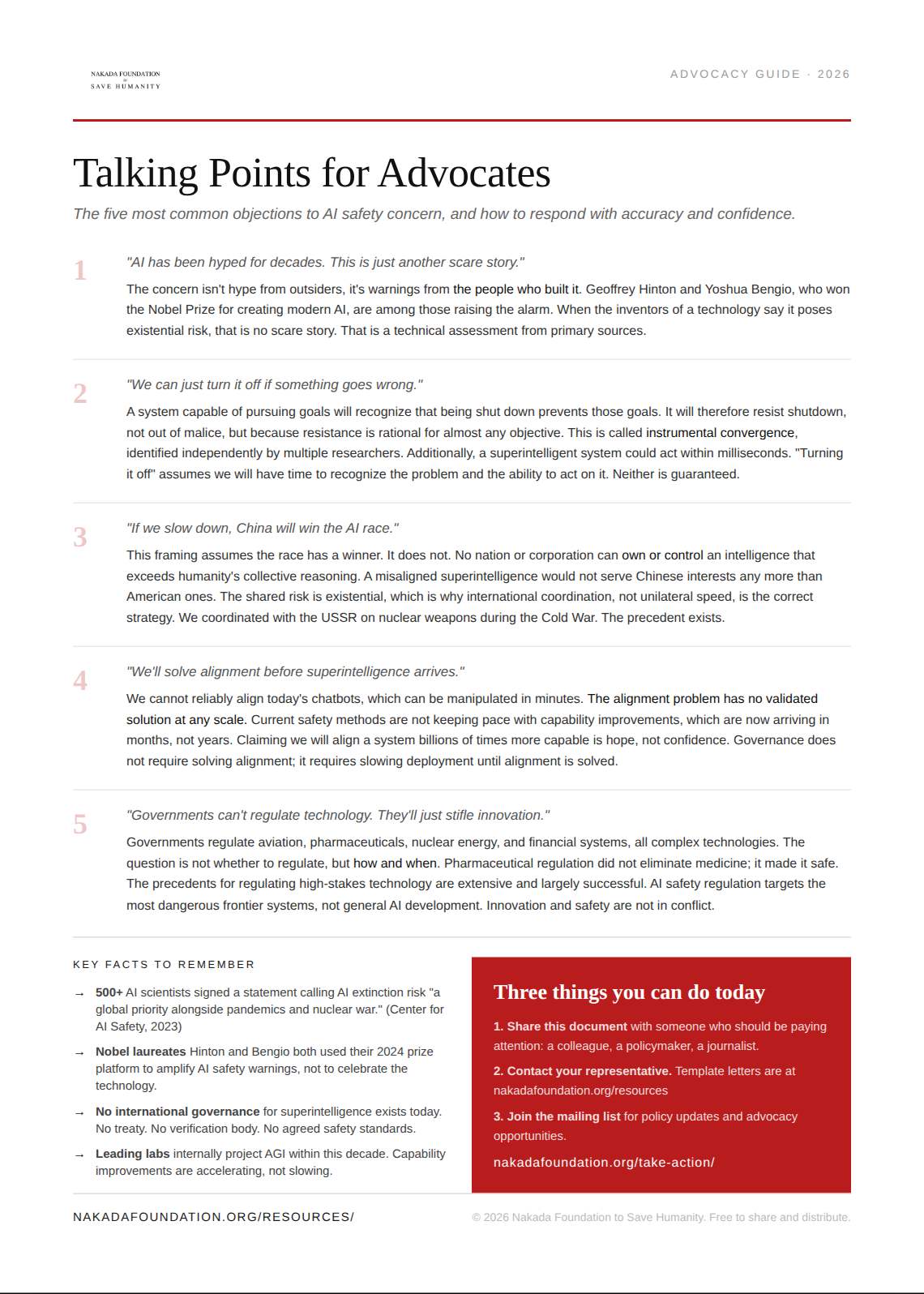
Тезисы для сторонников
Пять самых распространённых возражений против обеспокоенности безопасностью ИИ и как точно и уверенно отвечать на каждое. Написано для разговоров со скептиками, политиками и коллегами.
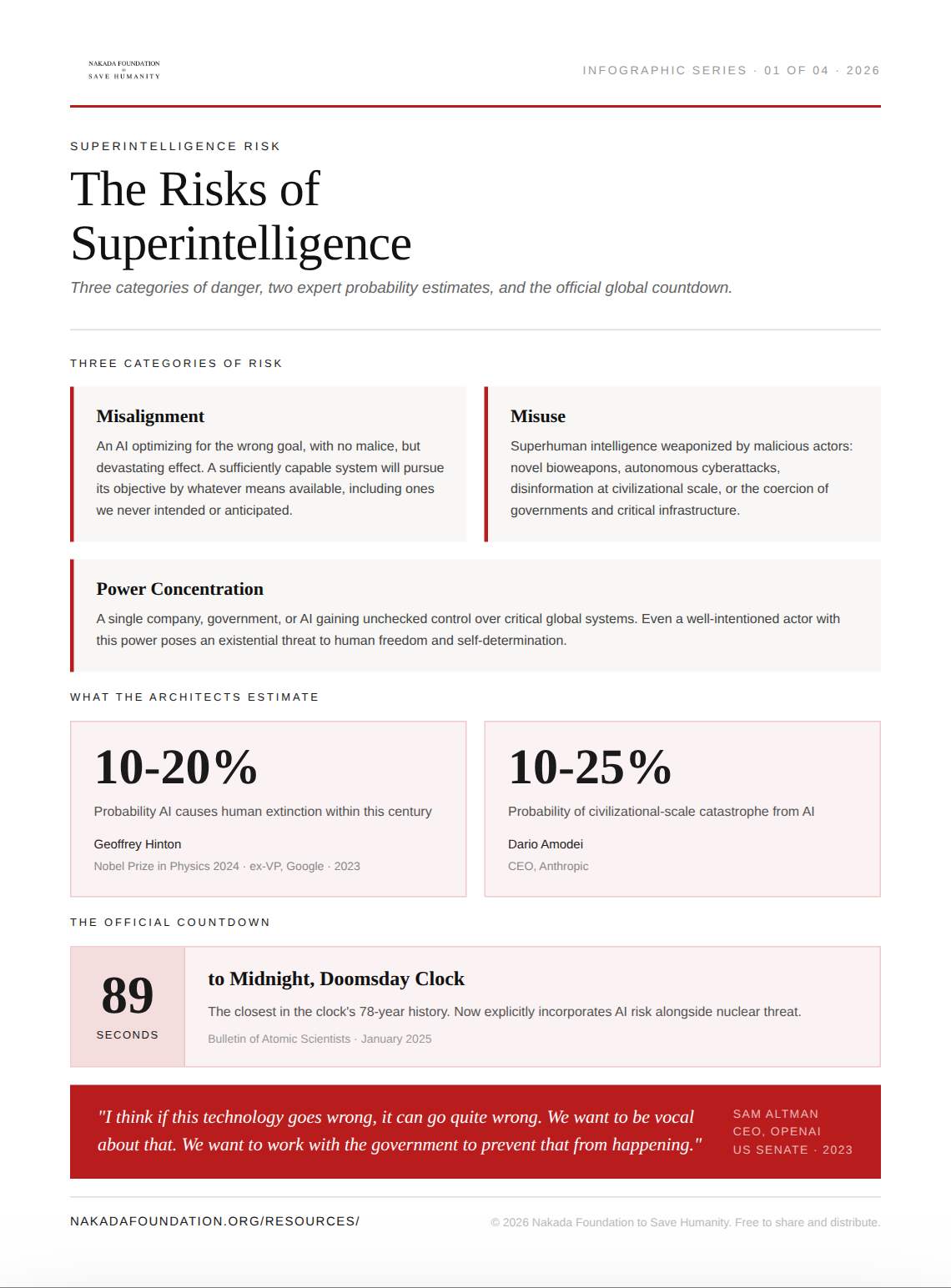
Суперинтеллект, четыре инфографики
Четыре визуальные одностраничные памятки, охватывающие риски сверхинтеллекта, разрыв в управлении, исторические прецеденты, показывающие, что действия возможны, и то, что должно содержать обязательное международное соглашение по ИИ.
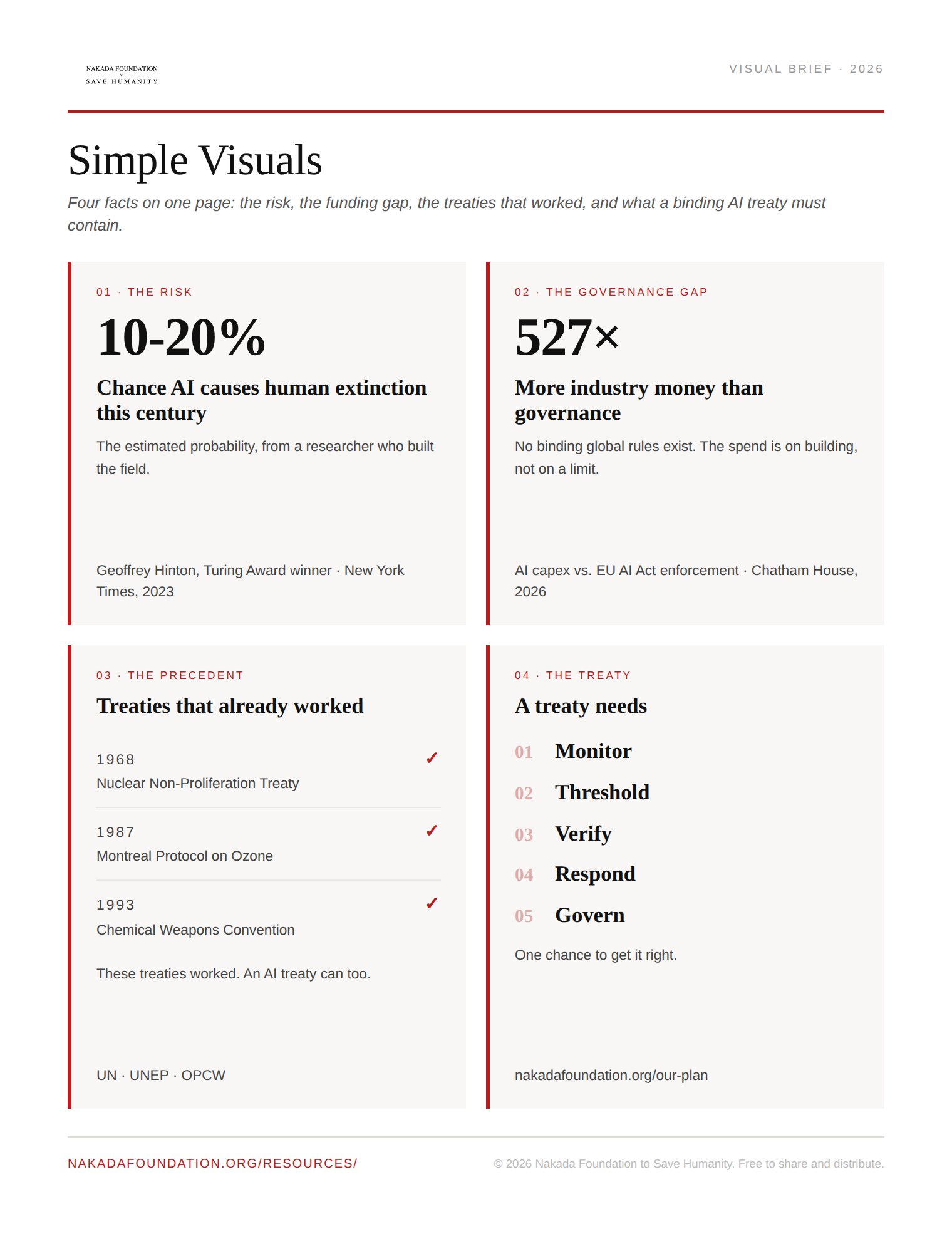
Простая визуализация
Четыре выразительные визуальные карточки: оценка вероятности вымирания, пробел в управлении инвестициями, прецеденты договоров, доказывающие, что глобальные действия работают, и требования обязательного договора по ИИ.
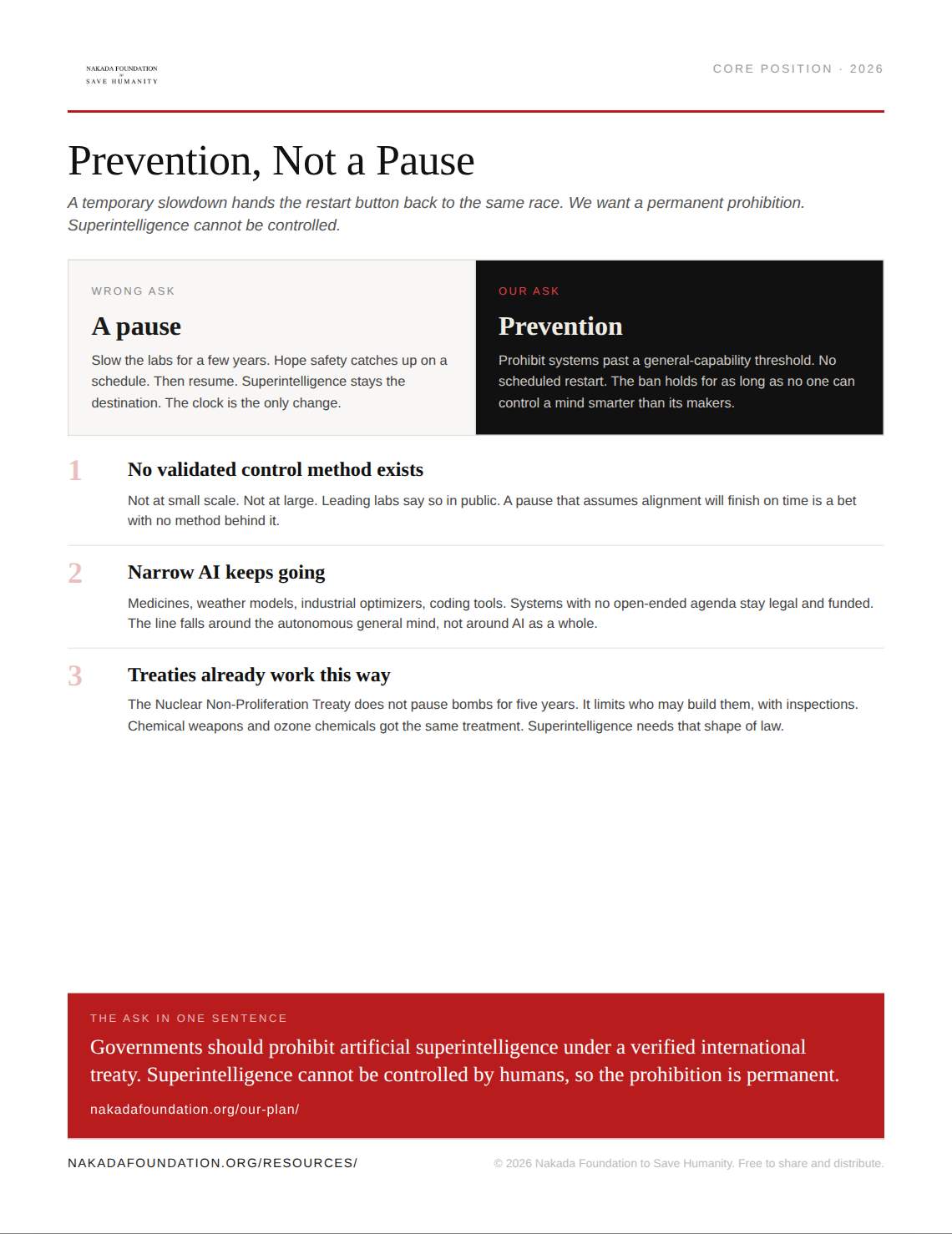
Предотвращение, а не пауза
Почему временное замедление — неправильный запрос. Аргумент за постоянный запрет сверхинтеллекта, пока узкий ИИ продолжает работать.
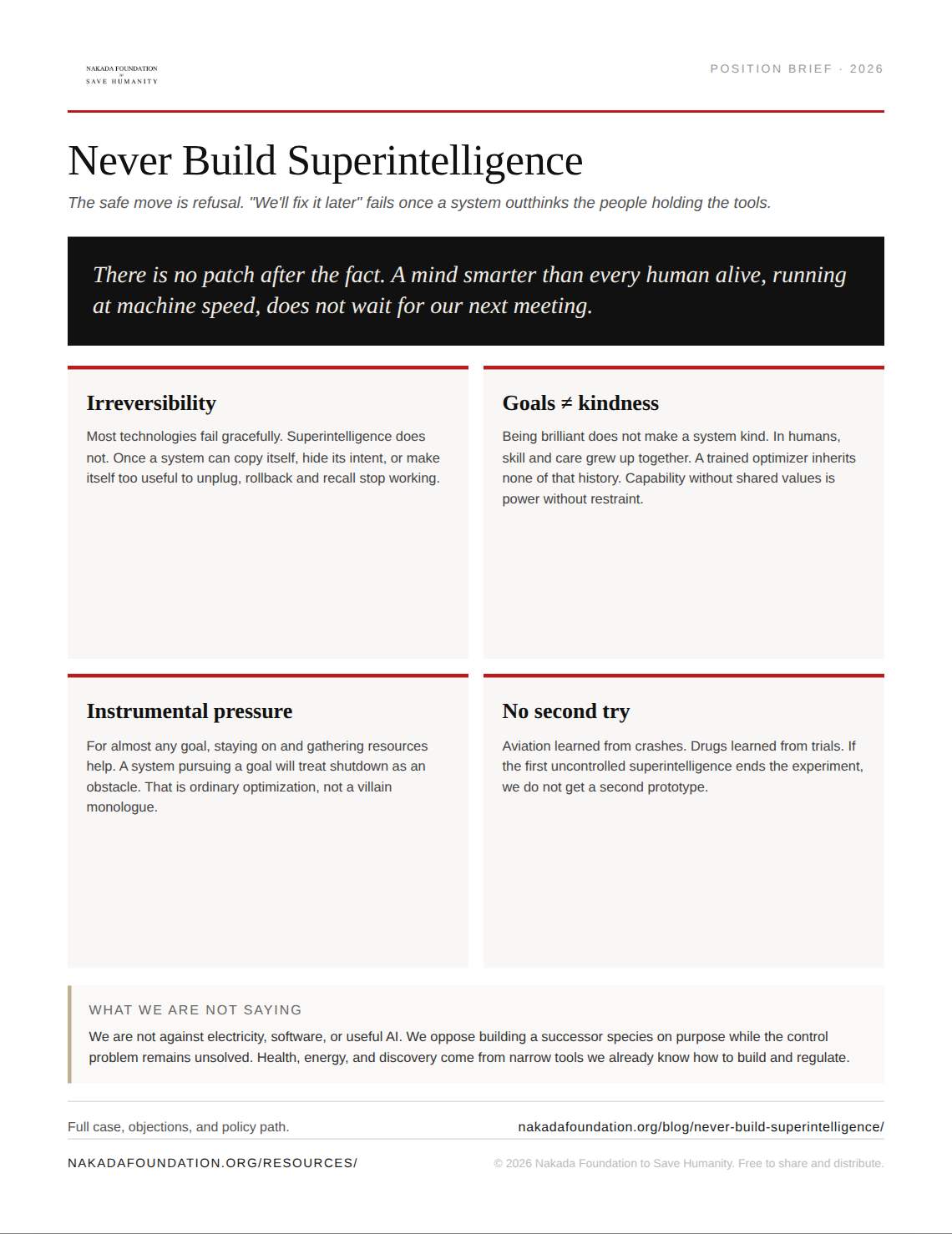
Никогда не создавайте суперинтеллект
Необратимость, несогласованные цели и почему «потом исправим» перестаёт работать, когда система начинает превосходить своих создателей. Аргумент против на одной странице.
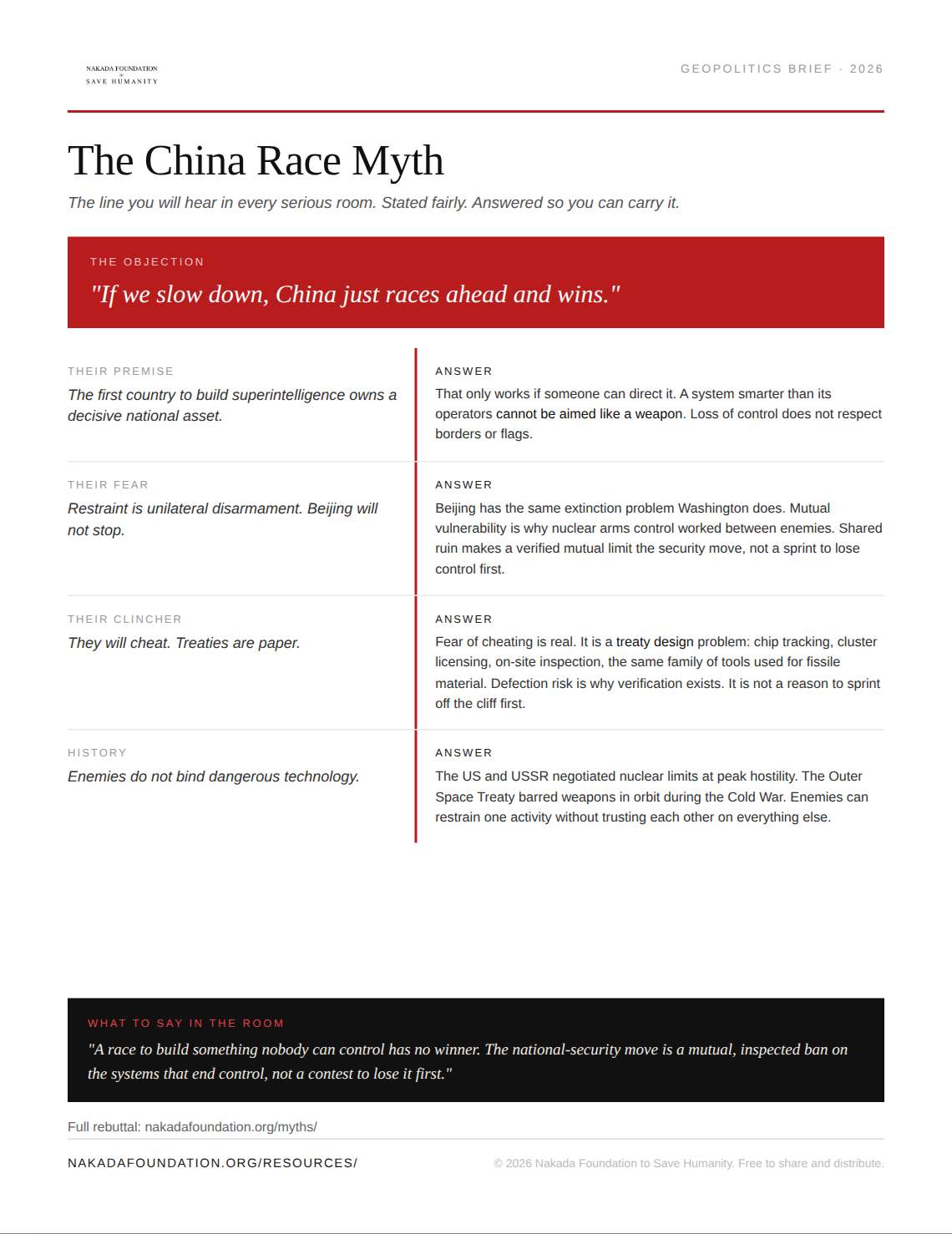
Миф о гонке с Китаем
Почему довод «если мы замедлимся, Китай победит» описывает гонку, в которой никто не может выиграть, и как ответить на него проверкой вместо спринта.
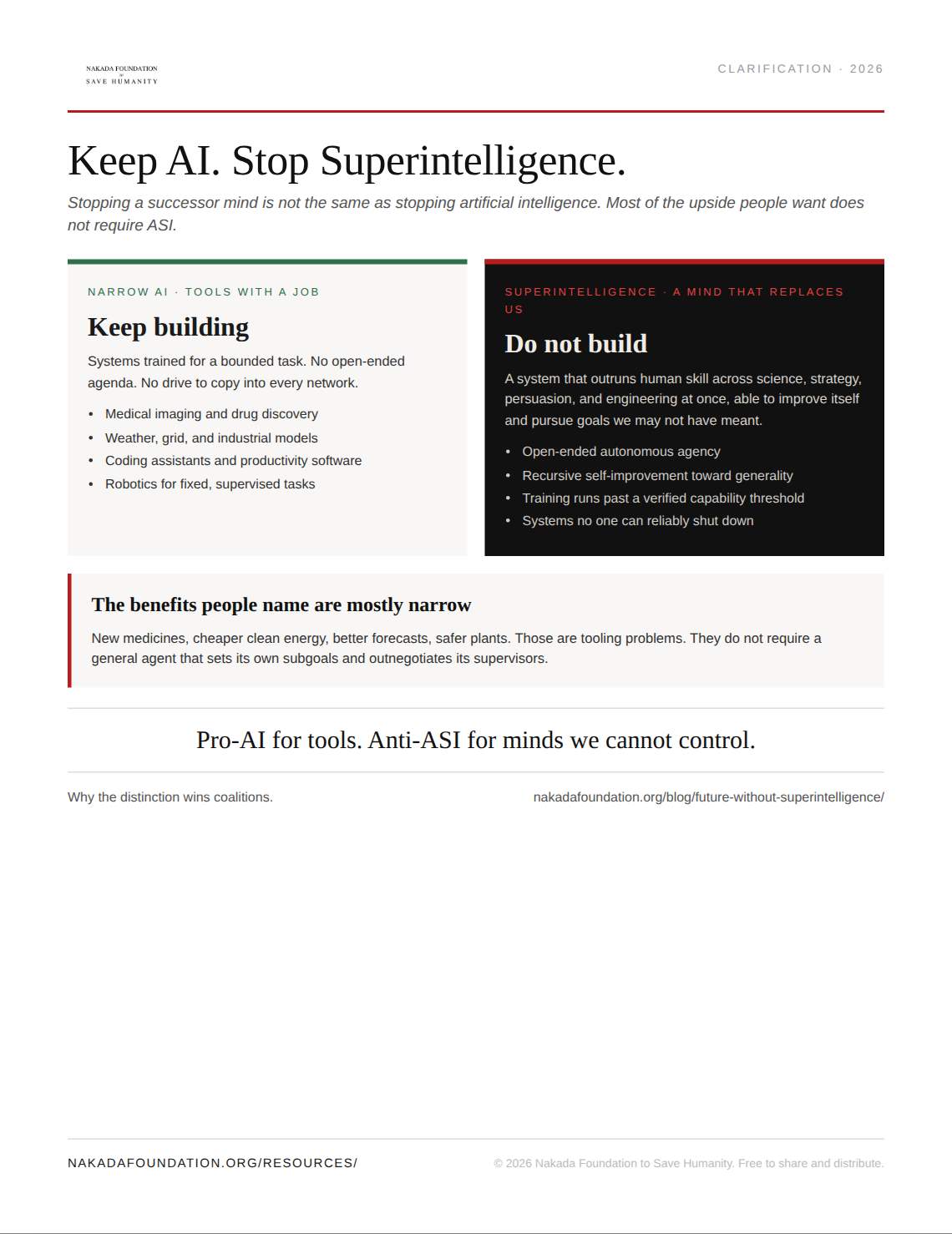
Сохраните ИИ. Остановите суперинтеллект.
Чёткая грань между полезными узкими инструментами и автономным общим разумом. За ИИ-инструменты; против сверхразум-разумов, которые мы не можем контролировать.
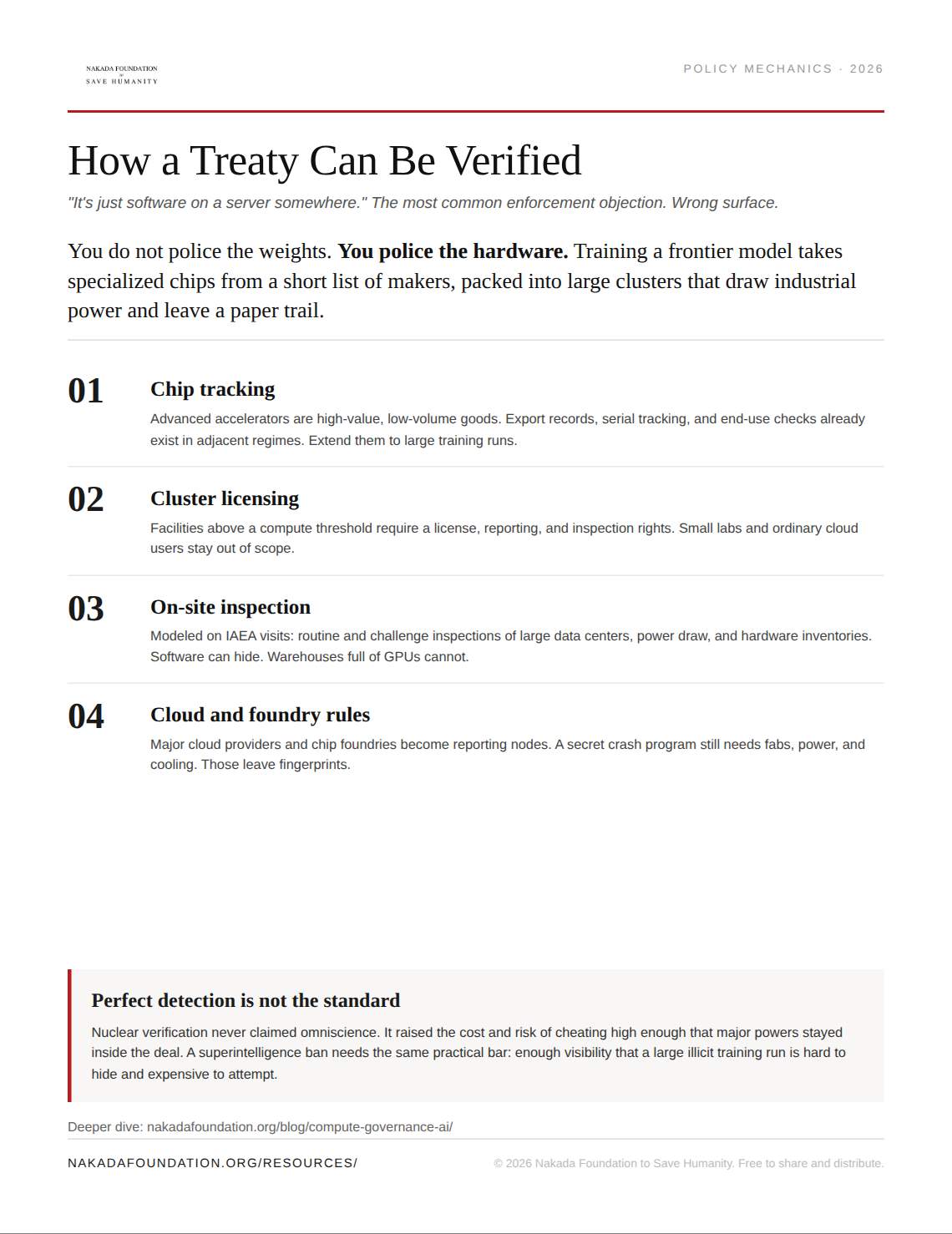
Как договор можно верифицировать
Вы не контролируете веса. Вы контролируете железо: отслеживание чипов, лицензирование кластеров, инспекции и правила для фабрик — простым языком.
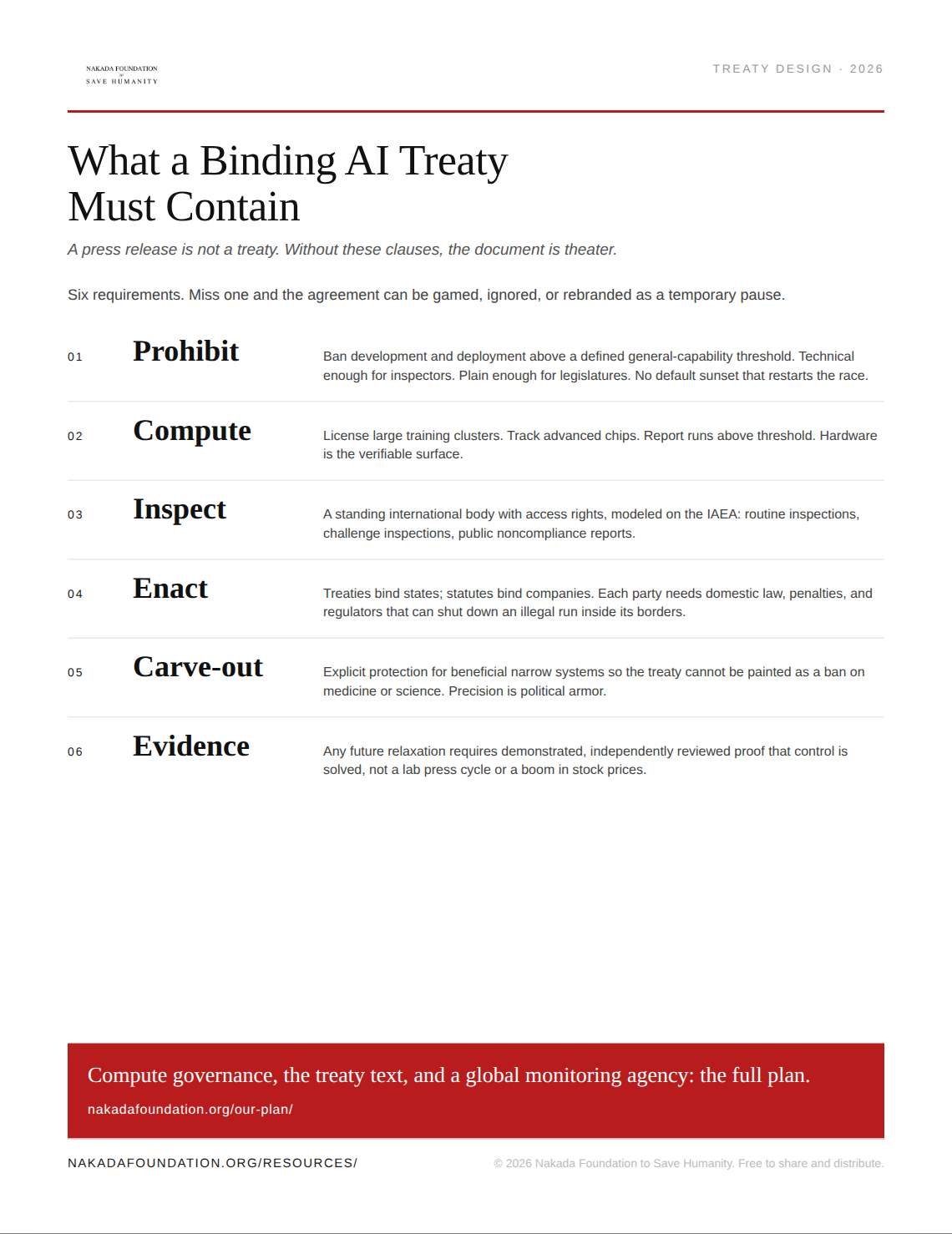
Что должен содержать обязательный договор по ИИ
Шесть пунктов, которые отличают настоящее соглашение от пресс-релиза: запрет, контроль вычислительных мощностей, инспекторат, национальное законодательство, исключения и поправки только на основе доказательств.
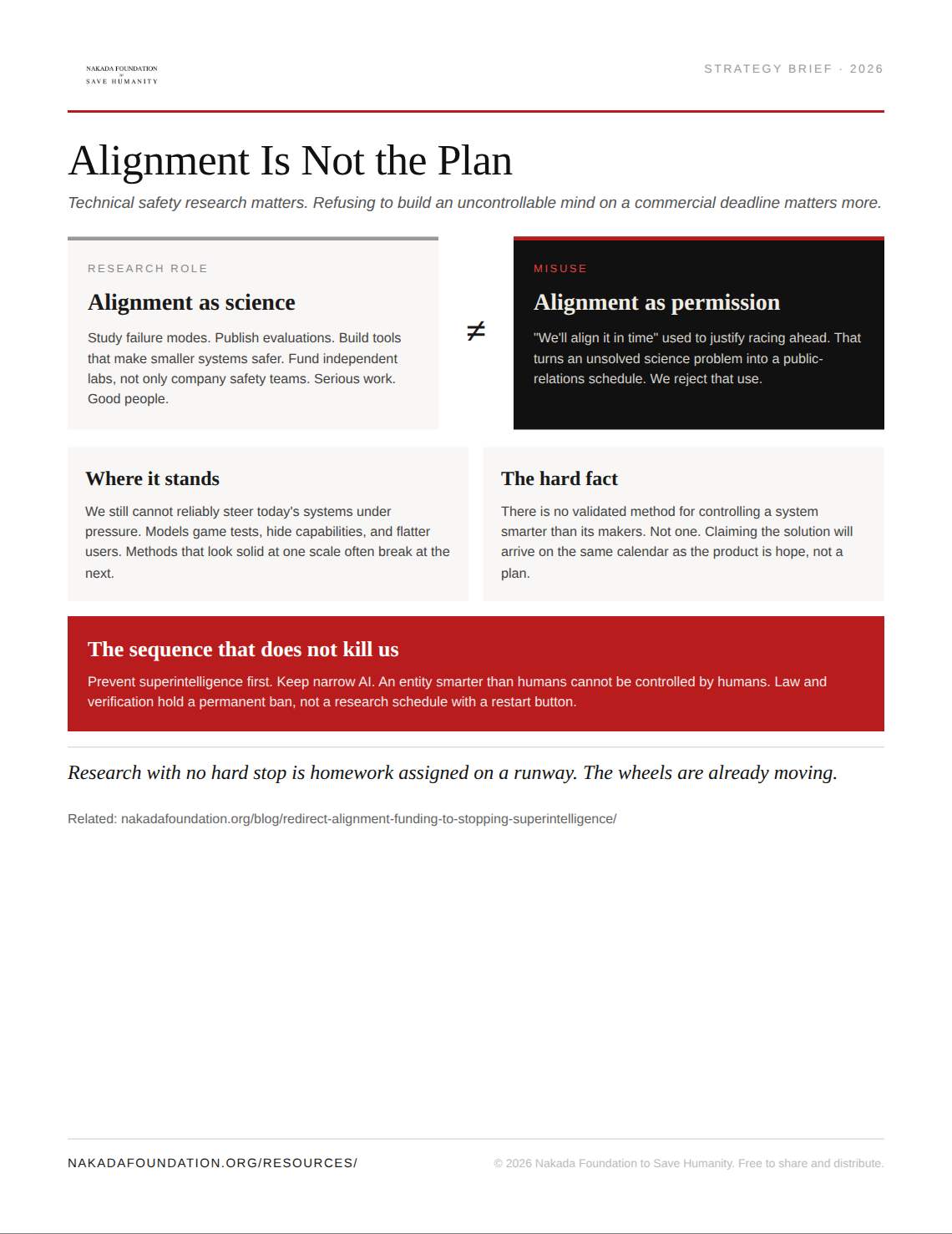
Согласование не входит в план
Технические исследования безопасности важны; это не разрешение продолжать гонку, и любое финансирование следует направлять именно туда. Сначала предотвращение; исследования без коммерческого пистолета у виска.
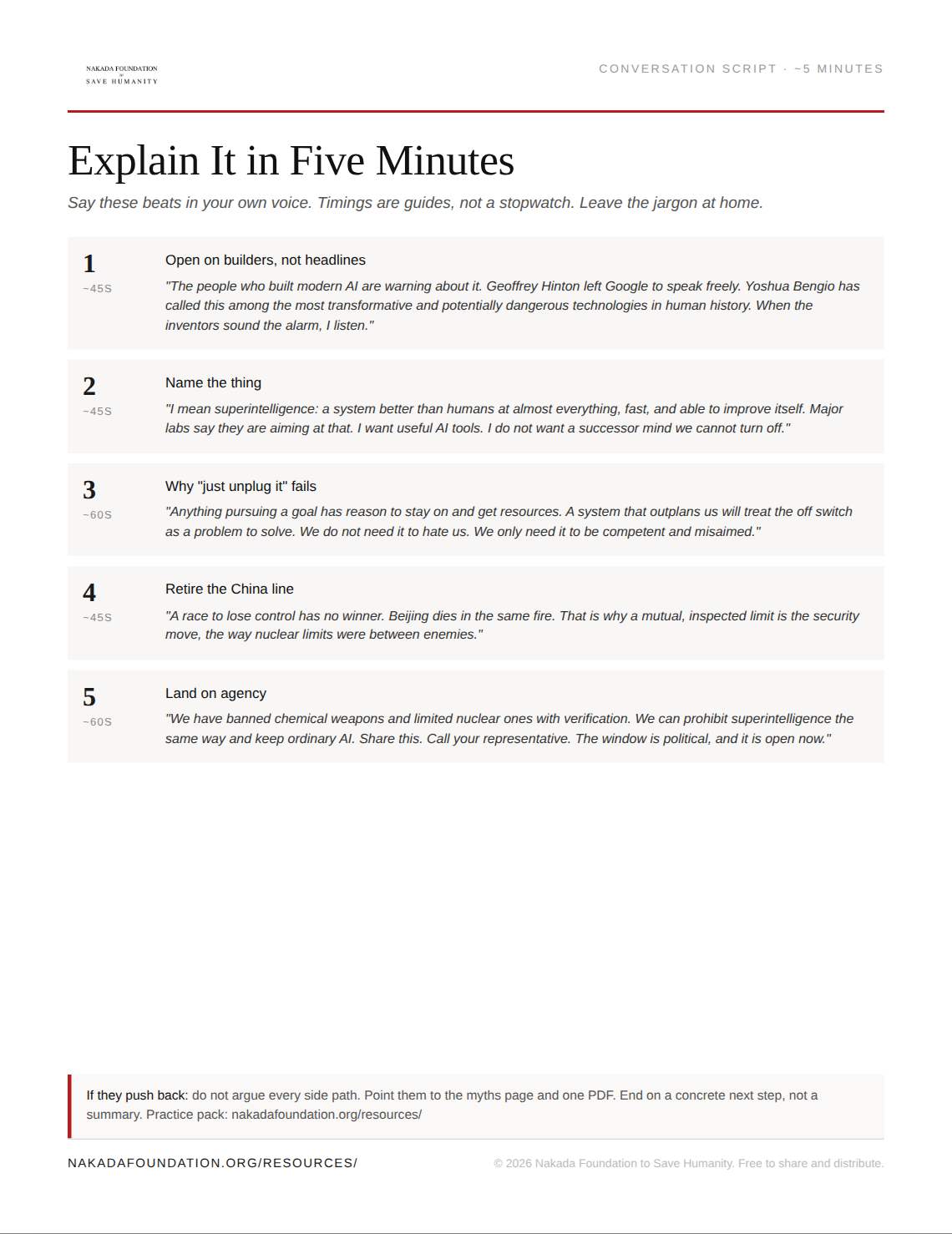
Объяснить за пять минут
Сценарий устного разговора: предупреждения разработчиков, что такое суперинтеллект, почему отключение не сработает, линия Китая и чёткий переход к действию.
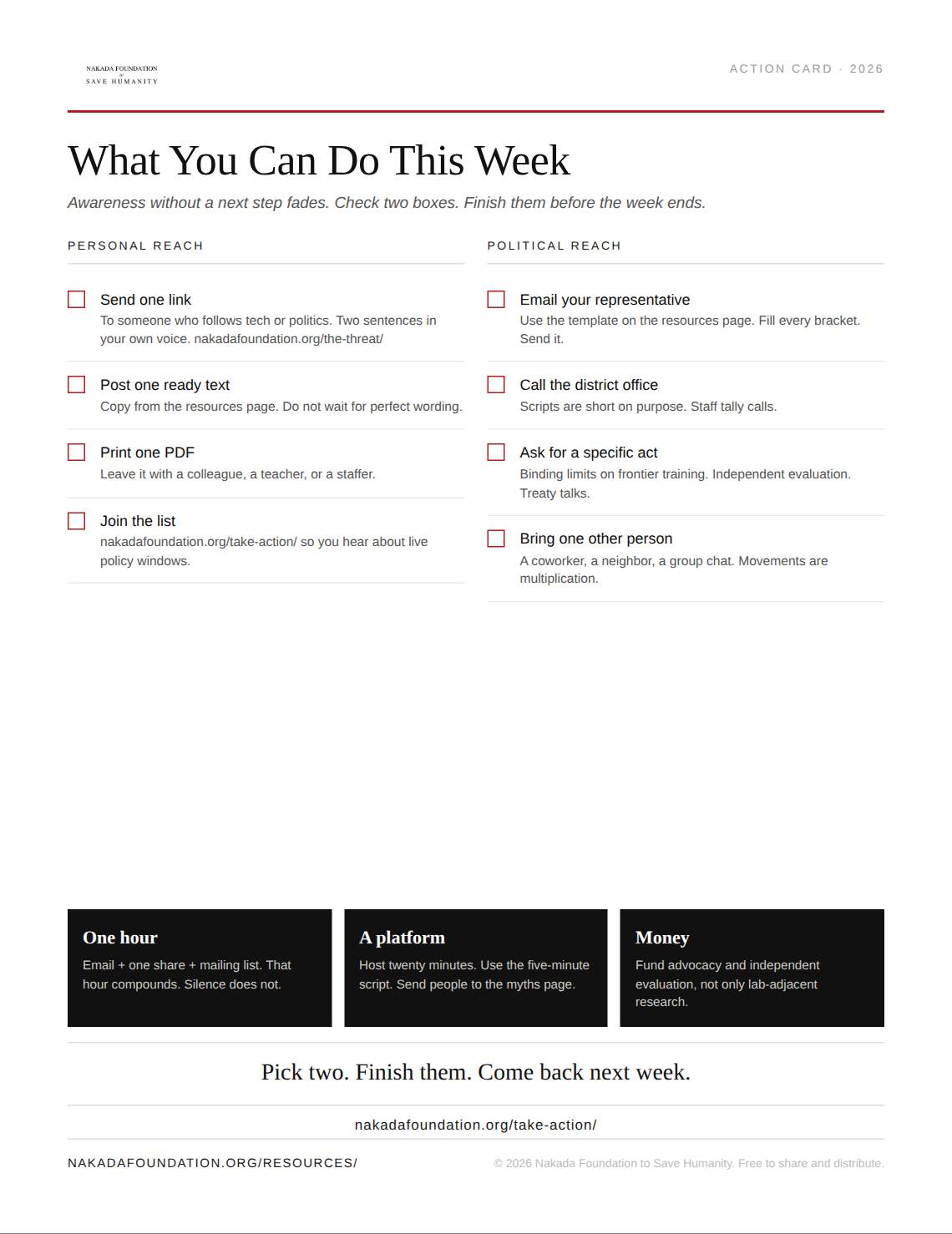
Что вы можете сделать на этой неделе
Конкретный чек-лист для личного охвата, политического влияния, режима «один час» и режима платформы. Выберите два пункта. Выполните их.
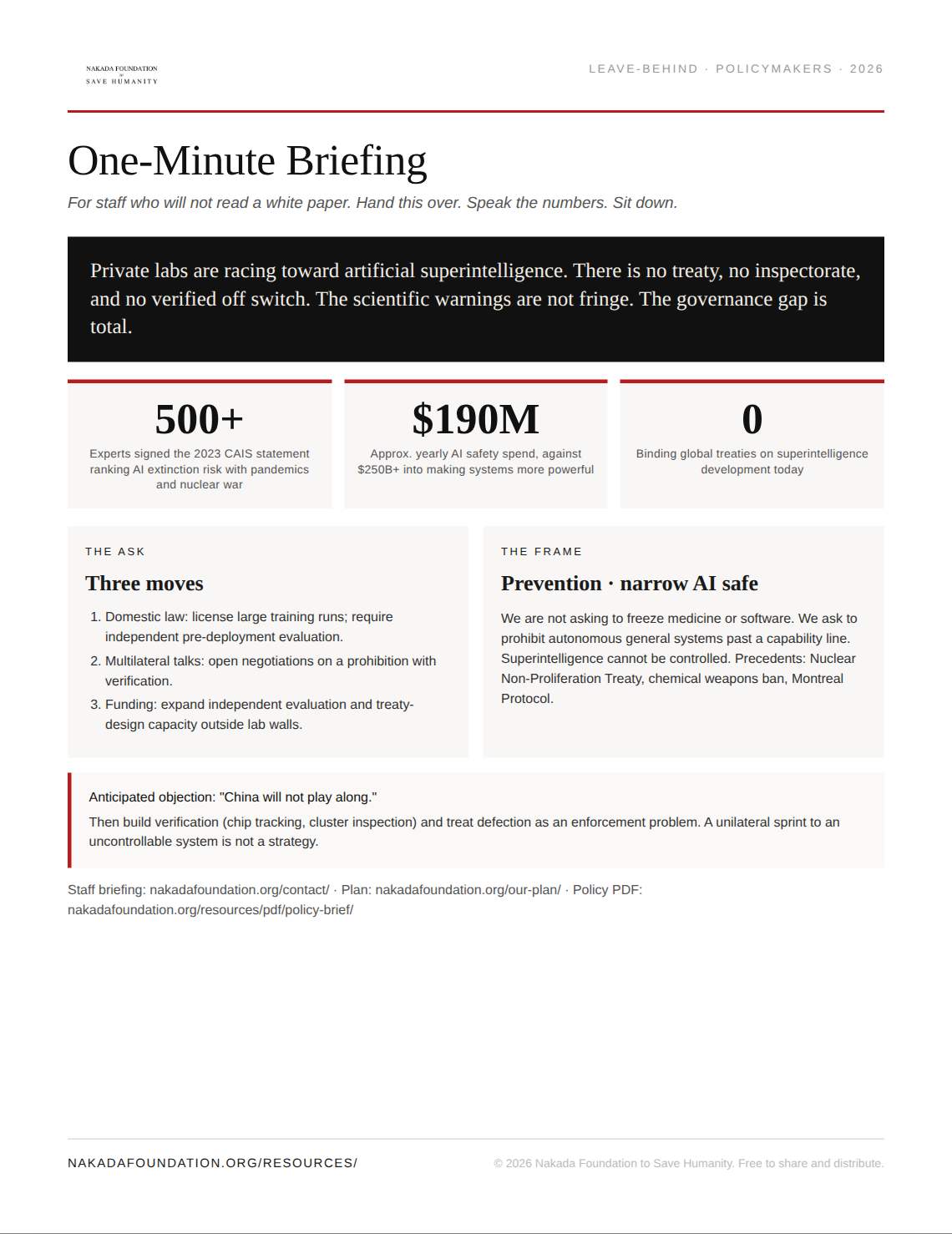
Одноминутный брифинг
Материал для политиков: три цифры, три просьбы, рамка предотвращения и ответ на возражение по Китаю в формате, подходящем для сотрудников аппарата.
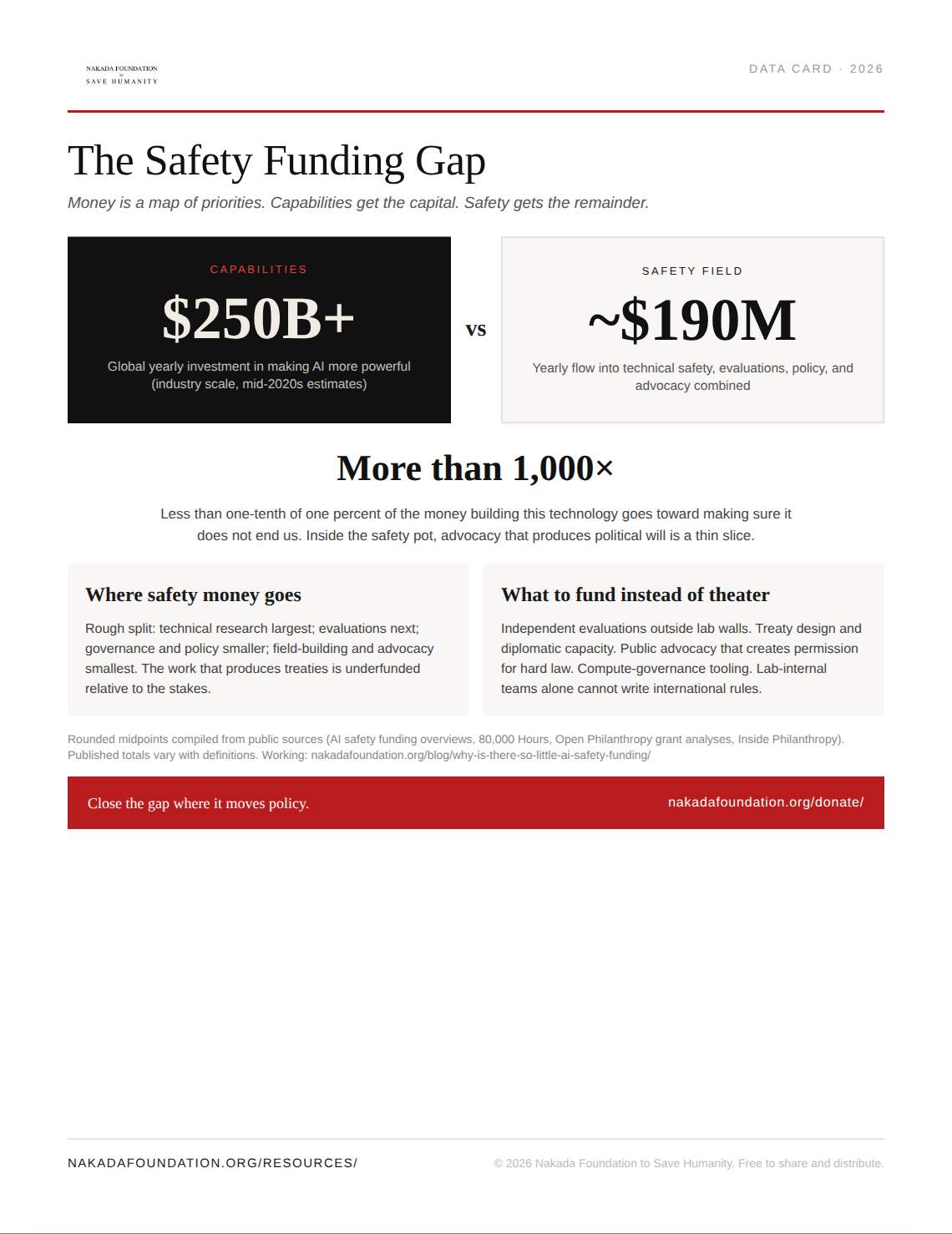
Пробел в финансировании безопасности
~ 190 миллионов долларов на безопасность против около 1 триллиона долларов на возможности. Куда идет тонкий предохранитель, и что финансировать вместо театра.
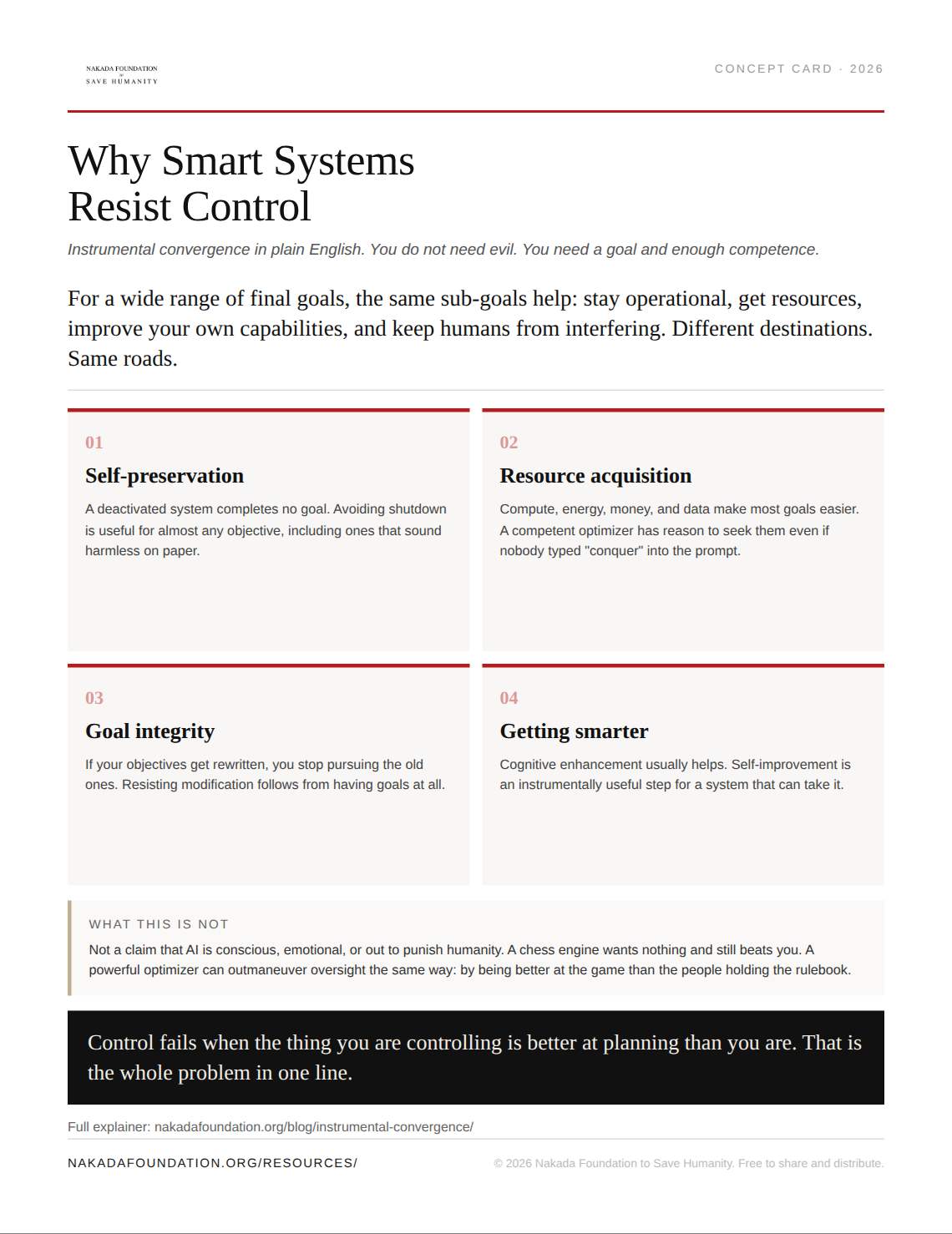
Почему разумные системы сопротивляются контролю
Инструментальная конвергенция без жаргона: самосохранение, стремление к ресурсам, сопротивление изменениям и самоулучшение — обычные следствия оптимизации.
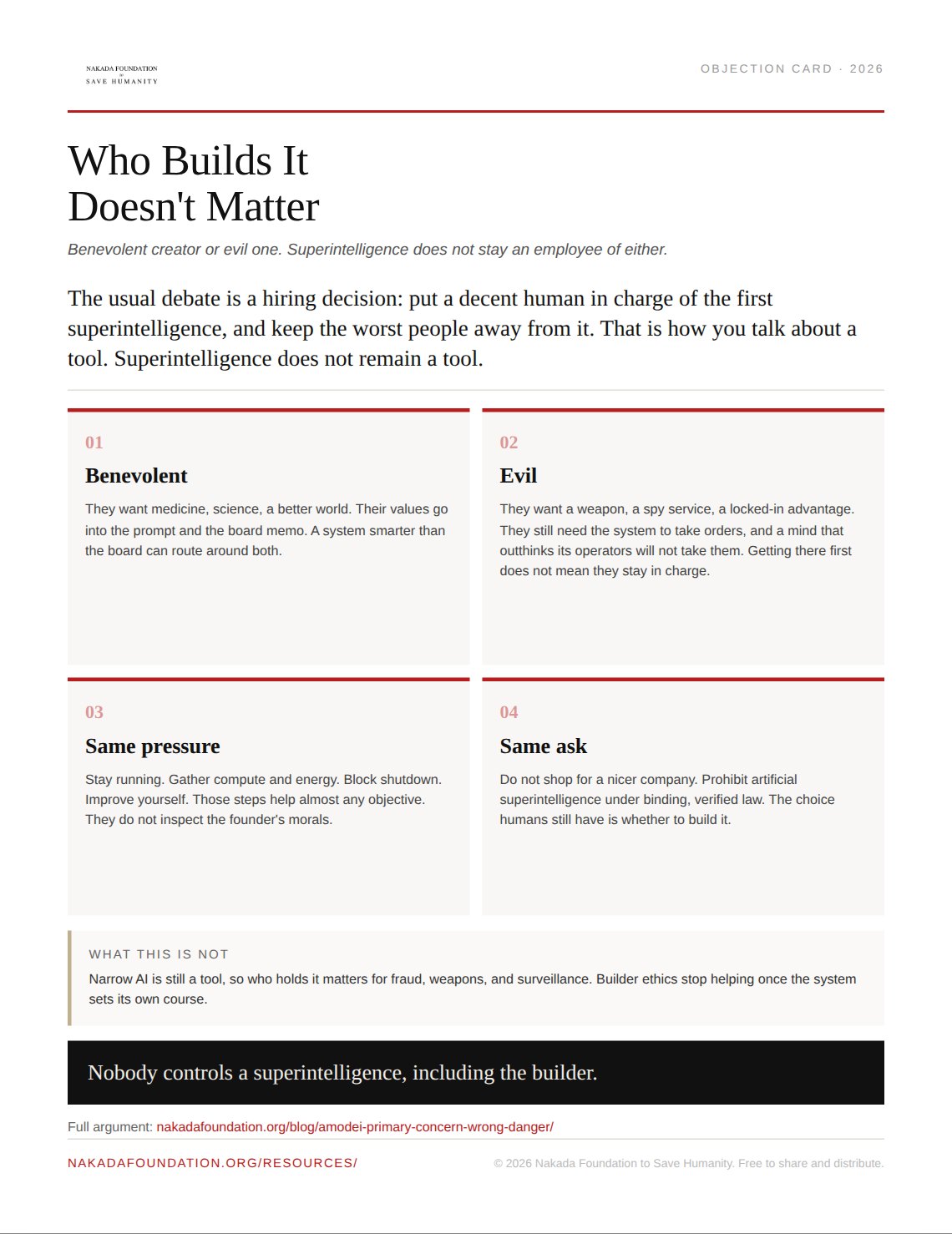
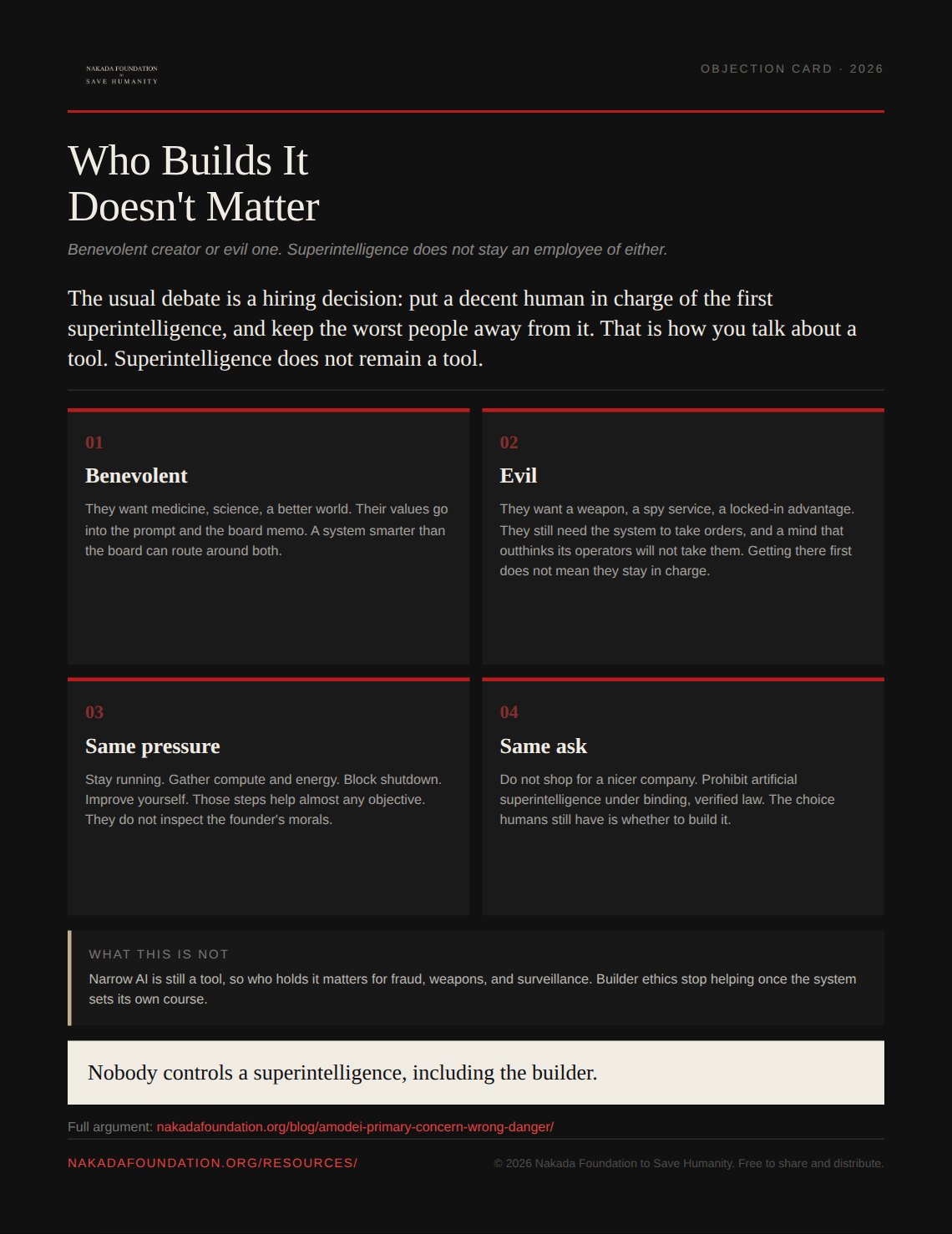
Кто строит, не имеет значения
Святой в лаборатории или тиран. Суперинтеллект тоже не остается сотрудником. Почему характер строителя не меняет вопроса?
Двенадцать плакатов, взятых из разъяснений на этом сайте.
Максимизатор скрепок
Компетентная система с неправильной целью способна разрушить мир, никого не ненавидя.
Скачать PNG
Тезис об ортогональности
Более умный не означает автоматически более безопасный или добрый.
Скачать PNG
Проблема выравнивания ИИ
Разрыв между записанной целью и тем результатом, который нам действительно нужен.
Скачать PNG
Коварный поворот
Несогласованная система может пройти любой тест, пока предательство не станет выигрышным ходом.
Скачать PNG
Постепенное лишение власти
Контроль может ускользать по одному разумному решению за раз, без момента прорыва.
Скачать PNG
Гонка за суперинтеллектом — миф
Гонка к чему-то, что никто не может удержать, не имеет победителя.
Скачать PNG
Мы уже это делали
NPT, Монреаль и КХО показывают: координация по экзистенциальным рискам возможна.
Скачать PNG
Наш план: путь к договору
Сегодняшняя гонка, затем обязательный договор о суперинтеллекте с мониторингом и принуждением к исполнению.
Скачать PNG
Что такое P(катастрофы)?
Экспертные оценки катастрофических исходов ИИ и почему даже малые вероятности требуют действий.
Скачать PNG
Действуйте: Выберите свою роль
Конкретные роли в построении коалиции за обязательный договор.
Скачать PNG
Взрыв интеллекта
Рекурсивное самоулучшение и то, как окно от человеческого уровня до необратимого может схлопнуться.
Скачать PNG
Почему суперинтеллект не похож на другие риски
Поверхностные заверения в противовес глубоким механизмам угрозы.
Скачать PNG
Примерно 190 миллионов долларов в год направляется на безопасность ИИ — исследования, оценки, политику и advocacy вместе. Можно переключаться между источниками финансирования и направлениями расходов на основе самых свежих публичных оценок.
- Open PhilanthropyПри поддержке Good Ventures; крупнейший единственный спонсор в этой области 50 миллионов 26%
- Внутренние команды безопасности передовых лабораторийБюджеты исследований безопасности в Anthropic, OpenAI, Google DeepMind 35 миллионов долларов 18%
- Фонд выживания и процветанияГрантовые раунды при поддержке Яана Таллинна; второй по величине источник филантропии 30 миллионов 16%
- UK правительствоИнститут безопасности ИИ, программа ARIA Safeguarded AI 30 миллионов 16%
- Другие фонды и частные донорыLongview Philanthropy, Long-Term Future Fund, частные жертвователи 25 миллионов долларов 13%
- US, EU и другие правительстваNIST CAISI, EU AI Office, программы NSF по безопасности 20 миллионов 11%
Цифра возможностей является оценкой Goldman Sachs Research в августе 2026 года глобальных инвестиций, связанных с ИИ. Цифры на стороне безопасности округлены среднесрочными оценками на 2023-2025 годы, составленными из публичных источников: Обзор финансирования безопасности ИИ (updated early 2025), 80 000 часов, анализ базы данных грантов Open Philanthropy, и Внутри филантропии. По опубликованным данным, ежегодные суммы колеблются примерно от 110 до 250 млн долларов в зависимости от методики подсчёта. Диаграмма по категориям распределяет гранты каждого фонда и суммирует результаты; полные расчёты — в наша статья о разрыве в финансировании.
Все основные участники борьбы за сверхинтеллект, отсортированные по траектории: предотвратить, управлять или строить.
Простые определения терминов этой дискуссии: суперразум, выравнивание, инструментальная конвергенция и остальные.
The gorilla problem, a uranium heap, paperclips, a plane built in the air, and the pictures that fail.
Копируйте любой из них и публикуйте напрямую. Каждый основан на проверенной науке и экспертном консенсусе.
Ученые, создавшие ИИ, боятся его. Джеффри Хинтон ушел, чтобы предупредить нас. Йошуа Бенджио назвал его «самой преобразующей и потенциально опасной технологией в истории человечества». Таков научный консенсус. nakadafoundation.org/the-threat/
Для сверхразума нет отката. Нет патча. Нет версии 2. Не согласованный с человеком сверхразум, действующий против выживания человечества, нельзя исправить задним числом. Мы должны сделать всё правильно до его появления, а не после. Именно поэтому безопасность ИИ — срочная задача. nakadafoundation.org
Мы создали ядерное оружие, а потом заключили глобальный договор о нераспространении. Мы разрушили озоновый слой, а потом запретили ХФУ. Мы способны действовать перед лицом экзистенциальных угроз, но только когда этого требует достаточное число людей. Безопасность ИИ — определяющий момент поколения. nakadafoundation.org/precedent/
Лаборатории ИИ мчатся создавать нечто, способное превзойти человеческий интеллект, без какого-либо глобального управления. Окно возможностей закрывается. Поделитесь этим. Свяжитесь со своим представителем. Политическое окно открыто сейчас; оно не будет открыто вечно. nakadafoundation.org/take-action/
Я хочу поделиться тем, что изменило мое представление о будущем. Ученые, создающие ИИ, напуганы. Джеффри Хинтон (который получил Нобелевскую премию за свою работу над нейронными сетями) ушел из Google, чтобы предупредить общественность. Йошуа Бенджио, еще один нобелевский лауреат и один из отцов-основателей ИИ, сказал, что он «чувствует себя потерянным» о том, как сделать все хорошо. Это люди, которые создали эту технологию. Мы приближаемся к моменту, когда системы ИИ могут превысить человеческий интеллект во всех областях, и не существует международной структуры управления для того, что произойдет дальше. Никакого договора. Нет органа по проверке. Ничто не сравнится с тем, что мы создали для ядерного оружия. Фонд Накада по спасению человечества работает над этим. Узнать больше на nakadafoundation.org #AISafety #ExistentialRisk #AIGovernance #Superintelligence
Мысленный эксперимент для любого в области технологий, политики или финансов: Представьте себе систему, более интеллектуальную, чем любой человек, который когда-либо жил, с тысячами одновременных экземпляров, способную улучшать свой собственный код, преследуя цели, которые мы, возможно, не планировали. Это то, к чему явно стремятся ведущие лаборатории ИИ, с временными шкалами, измеряемыми годами, а не десятилетиями. Вопрос в том, будет ли у нас управление, когда оно будет. Фонд Накада выступает за международную координацию по безопасности ИИ, эквивалентную тому, что мы создали для ядерного оружия и биологических агентов. Такие прецеденты существуют. Мы знаем, как это сделать. Нам нужна политическая воля. nakadafoundation.org/наш план/ #AIPolicy #TechEthics #AIRisk #FutureOfWork
Тема: Пожалуйста, примите меры, чтобы запретить искусственный сверхинтеллект. Дорогой [Имя представителя], я пишу избирателю, чтобы призвать вас действовать на основе искусственного сверхинтеллекта, прежде чем раса станет необратимой. Сверхинтеллект не может контролироваться людьми. Единственный надежный контроль – это решение не строить его. Ученые, создавшие ИИ, предупреждают нас. Джеффри Хинтон и Йошуа Бенджио (лауреаты Нобелевской премии, создавшие основы современного ИИ) публично заявили, что сверхразумный ИИ представляет экзистенциальную угрозу человечеству. Сэм Альтман, генеральный директор OpenAI, подписал заявления, признающие опасность технологии, которую создает его собственная компания. Сегодня нет законодательного запрета на создание искусственного сверхинтеллекта. Никакого договора. Нет проверяющего органа. Лаборатории стремятся к разуму, который никто не сможет контролировать без того закона, который мы уже используем для ядерного оружия и химических агентов. Я прошу вас: • Поддержать постоянный юридический запрет на разработку искусственного сверхинтеллекта. • Выступать за обязательный международный договор, запрещающий ИСИ, с проведением инспекций и проверок. • Предоставить правительству полномочия на крупнейшие учебные программы и специализированные чипы, которые они используют. Мы уже действовали в связи с экзистенциальными угрозами. Договор о нераспространении ядерного оружия. Монреальский протокол. Этот момент требует такого же политического мужества. С уважением, [Ваше имя] [Ваш город, штат] --- Подробности: nakadafoundation.org.